
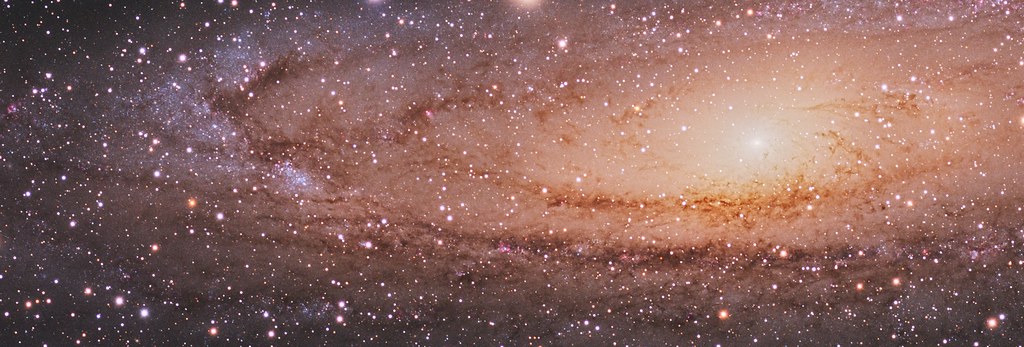

M31-V1 star: The Best Proven Discovery in Astronomy
M31-V1 star has captivated astronomers and changed our universe in significant ways. This remarkable discovery by the Hubble Space Telescope has opened new avenues for research and exploration.
What is the M31-V1 star?
The M31-V1 star is a significant astronomical discovery that has captivated scientists and stargazers alike. Located in the Andromeda Galaxy, this star was first observed by the Hubble Space Telescope, marking a pivotal moment in the study of distant celestial bodies.
M31-V1 is unique due to its brightness and specific characteristics that allow astronomers to study it in detail. Here are some key points about this remarkable star:
- Distance: The M31-V1 star is situated approximately 2.5 million light-years from Earth, making it one of the farthest stars that can be observed with clarity.
- Type: This stellar object is classified as a red supergiant, indicating it has exhausted the hydrogen in its core and is now fusing heavier elements.
- Importance: Observations of the M31-V1 star contribute to our understanding of stellar evolution and the lifecycle of galaxies.
- Impact: The study of M31-V1 has implications for understanding the expansion of the universe and the distribution of dark matter.
In conclusion, the M31-V1 star represents a milestone in astronomical research, enhancing our knowledge of the universe’s vastness and complexity.
The impact of M31-V1 on our universe
The discovery of the M31-V1 star has significantly impacted our understanding of the universe. Located in the Andromeda Galaxy, this star offers crucial insights into stellar evolution and the life cycles of massive stars. Its unique characteristics have prompted astronomers to reevaluate existing models of star formation and behavior.
One of the most profound implications of studying M31-V1 is its contribution to our knowledge of supernova processes. The star’s brightness and eventual explosion challenge previous assumptions, leading to new theories about the mechanics behind such cosmic events. This has sparked a renewed interest in the formation of black holes and neutron stars, providing a fresh perspective on the death of massive stars.
Furthermore, the observations of M31-V1 have highlighted the importance of advanced telescopes like Hubble. The clarity and detail captured from this distant star have enabled scientists to make more accurate calculations regarding distance and mass, which are fundamental for understanding the universe’s expansion.
In summary, the M31-V1 star is not just a distant point of light; it is a pivotal discovery that continues to influence astronomical research and deepen our comprehension of cosmic phenomena.
How Hubble viewed M31-V1 star
The M31-V1 star has captured the attention of astronomers and stargazers alike, largely due to its remarkable visibility through the Hubble Space Telescope. This powerful instrument has provided unprecedented insight into the characteristics and behavior of celestial bodies, and M31-V1 is no exception.
Utilizing Hubble’s advanced imaging capabilities, scientists were able to gather detailed data about M31-V1’s brightness and composition. This star, located in the Andromeda Galaxy, is unique in that it exhibits variations in its luminosity, which can be attributed to its pulsation. Hubble’s observations revealed that M31-V1 is a red supergiant, a classification that suggests it is nearing the end of its life cycle.
Furthermore, Hubble’s findings have paved the way for new theories regarding the evolution of massive stars. The data collected has allowed researchers to make connections between M31-V1 and other stellar phenomena, enhancing our understanding of the life cycles of stars in different galactic environments.
In summary, the Hubble Space Telescope’s observations of the M31-V1 star have not only changed our perspective on this single celestial object but have also contributed significantly to the broader field of astronomy.
Future implications of M31-V1 discovery
The discovery of the M31-V1 star has far-reaching implications for the field of astronomy and our understanding of the universe. As researchers continue to analyze the data gathered from Hubble’s observations, several potential applications are emerging.
Firstly, the M31-V1 star could serve as a benchmark for measuring cosmic distances. Its characteristics may help refine existing models, enabling astronomers to better calculate distances to other galaxies. This could lead to a more accurate understanding of the universe’s expansion.
Moreover, the study of M31-V1 can enhance our knowledge of stellar evolution. By examining its lifecycle, scientists may uncover secrets about the formation and death of stars, particularly in different environments. This understanding can lead to improved models of star formation across various galaxies.
Additionally, the insights gained from M31-V1 may influence the search for exoplanets. As researchers learn more about the star’s properties, they can identify similar stars that might host habitable planets, broadening the scope of our search for extraterrestrial life.
In summary, the M31-V1 star is not just a significant astronomical discovery but also a catalyst for future investigations that could reshape our grasp of the universe.
By kees scherer via Openverse